Tuesday, June 17, 2025 | Modified: Thursday, October 15, 2026 The Physio Team at Physio Inq
In this article
Summary
- Exercise is central to every stage of amputee rehabilitation: before a prosthesis, during prosthetic training and for long-term health.
- Stump (residual limb) exercises build strength, reduce swelling and prepare the limb for a prosthesis. They start early and progress as the wound heals.
- Above-knee and below-knee amputations need different emphasis: hip strength and extension above the knee, knee extension and quadriceps strength below it.
- Core, balance and upper-body strength matter as much as the residual limb, for transfers, walking and preventing falls.
- In Australia, physiotherapy after amputation may be funded through the NDIS, DVA, Support at Home or a Medicare chronic condition plan.
What Are The Best Exercises For Amputee Rehabilitation?
The best exercises for amputee rehabilitation are stump (residual limb) exercises, hip and core strengthening, balance training and upper-body strength work, progressed in stages by a physiotherapist. The right mix depends on the level of amputation, how well the limb has healed and whether a prosthesis is being used.
Recovering from an amputation is both a physical and an emotional process. It involves learning new ways to move, managing pain and regaining independence, and exercise supports all three.
This guide covers the stages of amputee rehabilitation, the psychological side of limb loss, stump exercises, how to exercise safely, and 10 exercises physiotherapists commonly use. It is written for people with limb loss, their families, support coordinators and allied health professionals.
Can Exercise Help People with Limb Loss Regain Mobility and Confidence?
Yes. A structured exercise program led by a physiotherapist helps people with limb loss build strength, prepare for a prosthesis, reduce the risk of secondary injuries and regain confidence in moving. Exercise also supports mood and wellbeing, which are often affected after limb loss.
What is the Rehabilitation for Amputations?
Rehabilitation after amputation is a staged process that restores physical function, supports emotional adjustment and builds independence. It can begin before surgery (prehabilitation) and usually continues long after a person returns home. A multidisciplinary team tailors it to the amputation level, the person’s health and their goals.
The main stages typically include
- Pre-prosthetic rehabilitation: pain management, wound healing, residual limb shaping and early mobilisation.
- Prosthetic fitting and training: gait training, balance work and functional movement with a prosthesis.
- Long-term conditioning: advanced exercise, return to work or leisure, and prevention of secondary complications.
Early rehabilitation focuses on range of motion and strength while preventing complications such as joint contractures, pressure areas and deep vein thrombosis. Clients often work with physiotherapists, prosthetists, occupational therapists and mental health professionals.
Additional components of rehabilitation include:
- Education on limb care and skin inspection: vital for preventing pressure injuries and infection.
- Home modifications and assistive equipment: including ramps, rails and transfer aids.
- Vocational rehabilitation: supporting a return to work or community activities.
- Peer support groups: for motivation and social connection.
- Nutritional guidance: supporting wound healing and muscle recovery.
Therapists also teach energy conservation and strategies for independence in self-care, such as bathing, dressing and preparing meals. The common challenges of amputee rehabilitation are covered in more detail in a separate article.
In Australia, amputee rehabilitation is delivered through hospital inpatient and outpatient programs, specialist rehabilitation centres, private practices and mobile services that come to the person’s home.

What are the Psychological Effects of Losing a Limb?
Losing a limb can bring grief, anxiety and a change in how a person sees themselves, and psychological recovery matters as much as physical rehabilitation. The impact is often greater when the amputation affects work, hobbies or social life, or follows a sudden injury.
Emotional challenges may include:
- grief over the loss of the limb
- anxiety and fear of dependency
- depression and social withdrawal
- body image concerns, including difficulty accepting the appearance of the residual limb
- loss of confidence in public spaces
- frustration with daily limitations
- post-traumatic stress, particularly after an accident-related amputation
Support can include counselling, psychological therapies such as Acceptance and Commitment Therapy (ACT), and peer support through organisations such as Limbs 4 Life. Mirror therapy and graded motor imagery may be used for phantom limb pain. Physiotherapists support this process by helping people feel capable and confident in their bodies again.
The psychological impacts of amputation are significant and should never be overlooked. Amputation often results in complex emotional responses tied to grief, trauma, and identity loss.
What are Stump Exercises?
Stump exercises (also called residual limb exercises) strengthen the muscles of the residual limb, reduce swelling and sensitivity, and prepare the limb for a prosthesis. They also include hip, pelvis and core work, which is critical for walking and posture.
Benefits of stump exercises include:
- preventing muscle wasting and joint stiffness
- reducing swelling and improving circulation
- desensitising the limb before prosthetic use
- teaching the brain to engage the remaining muscles (neuromuscular re-education)
- improving limb awareness and control
- building a base for transfers and walking
Examples include
- Isometric contractions: tensing the residual limb muscles without moving the joint.
- Hip extension and abduction: for pelvic control, especially after above-knee amputation.
- Residual limb elevation: to help reduce swelling.
- Soft tissue massage: for desensitisation and scar mobility once the wound has healed.
- Weight-bearing preparation: gradually preparing the limb for contact with a prosthetic socket.
Dynamic and advanced stump exercises include:
- Bridging with prosthetic socket weight: once cleared for gentle loading.
- Standing weight shifts onto the prosthetic side: builds control and confidence.
- Pelvic clocks: for lumbar mobility and core control.
- Balance work on unstable surfaces: improves balance and limb awareness.
Stump exercises for above-knee and below-knee amputees
- Above-knee (transfemoral): the priority is hip extension and abduction strength, to control the pelvis and prevent the hip stiffening in a bent position (a hip flexion contracture). Spending time lying on the stomach each day helps keep the hip straight.
- Below-knee (transtibial): the priority is full knee straightening and quadriceps strength, along with hip control. Avoiding long periods sitting with the knee bent helps prevent a knee flexion contracture.
Exercises are introduced in phases based on wound healing, pain and strength. A physiotherapist monitors the skin for pressure points and irritation throughout.
How to Exercise with an Amputated Limb?
People with an amputation can exercise safely by starting with seated or supported exercises, progressing gradually, and working with a physiotherapist on a plan that suits their amputation level and goals. Exercise doesn’t have to stop after limb loss; it needs planning.
Common concerns and solutions include:
- Fear of falling: start with seated or supported standing exercises and progress gradually.
- A prosthesis that feels unstable: work on core strength, hip stability and balance drills.
- Uncertainty about what’s safe: a physiotherapist can build a structured plan based on health status.
Tips for safe exercise:
- begin with non-weight-bearing activities, such as seated or water-based exercise
- progress slowly and avoid overloading the intact limb
- use a mirror or video to check posture
- include core, balance and coordination work
Recommended activities:
- resistance band and dumbbell training
- recumbent cycling or elliptical training
- swimming or hydrotherapy
- chair yoga or modified Pilates
- balance board or foam pad work
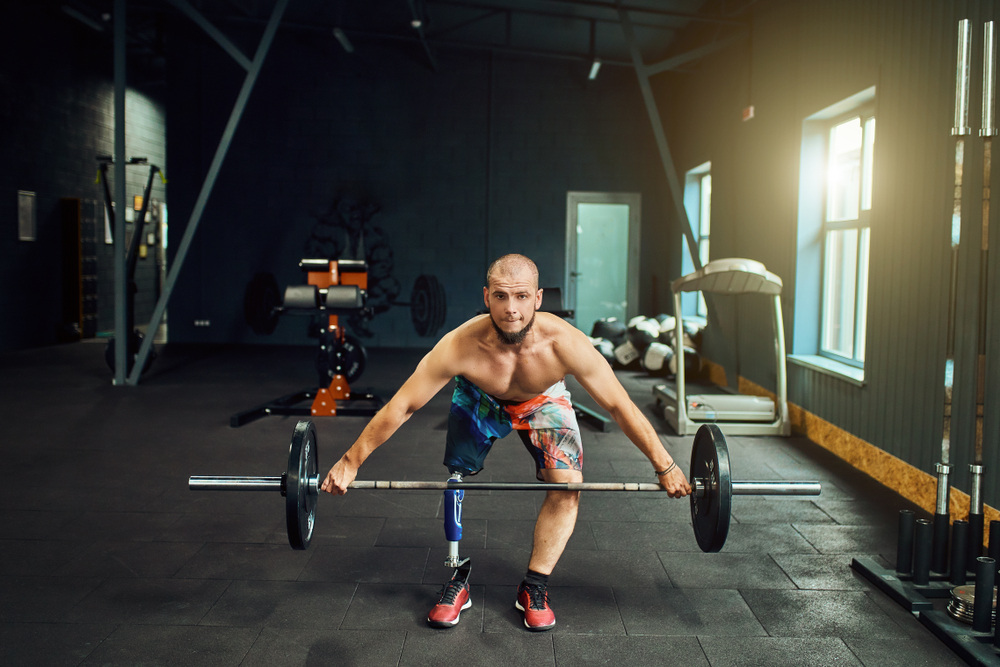
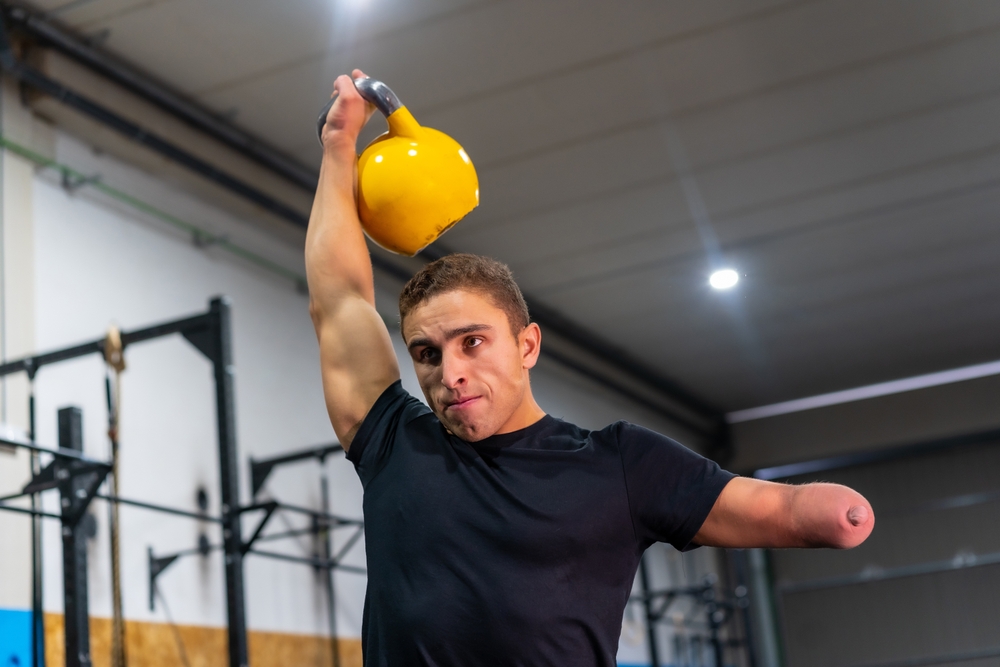
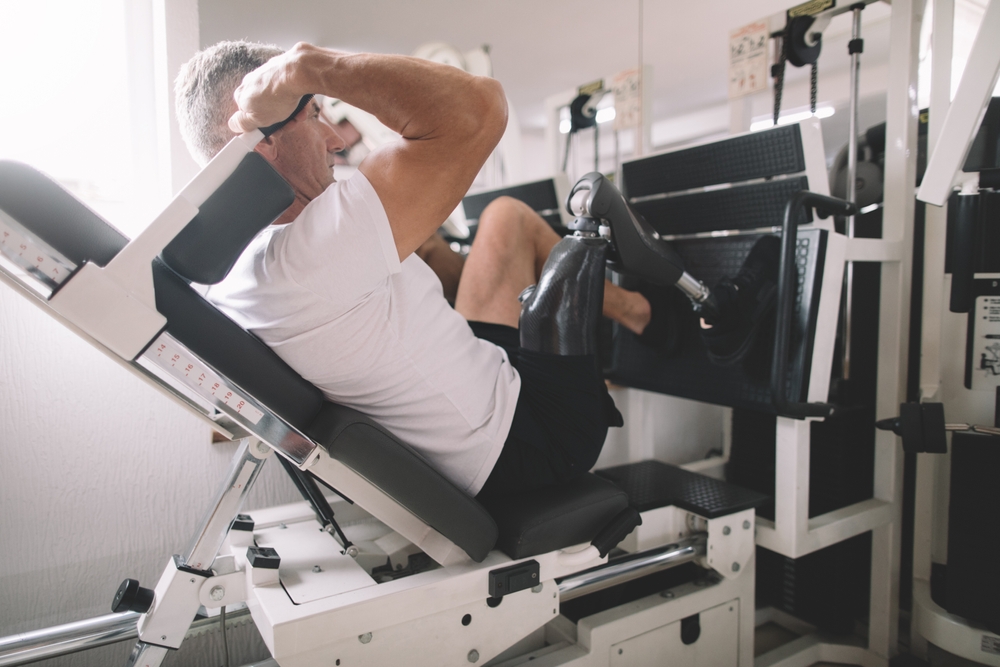
- adaptive sport, such as wheelchair sports or adaptive CrossFit
- home exercise programs supported by mobile physiotherapy or telehealth
Regular physical activity supports heart health and wellbeing and lowers the risk of overuse injuries in the intact limb. Consistency and technique matter more than intensity.
Top 10 Exercises for Amputees
These 10 exercises are commonly used in amputee rehabilitation programs. They target balance, core strength, pelvic control and upper-body strength:
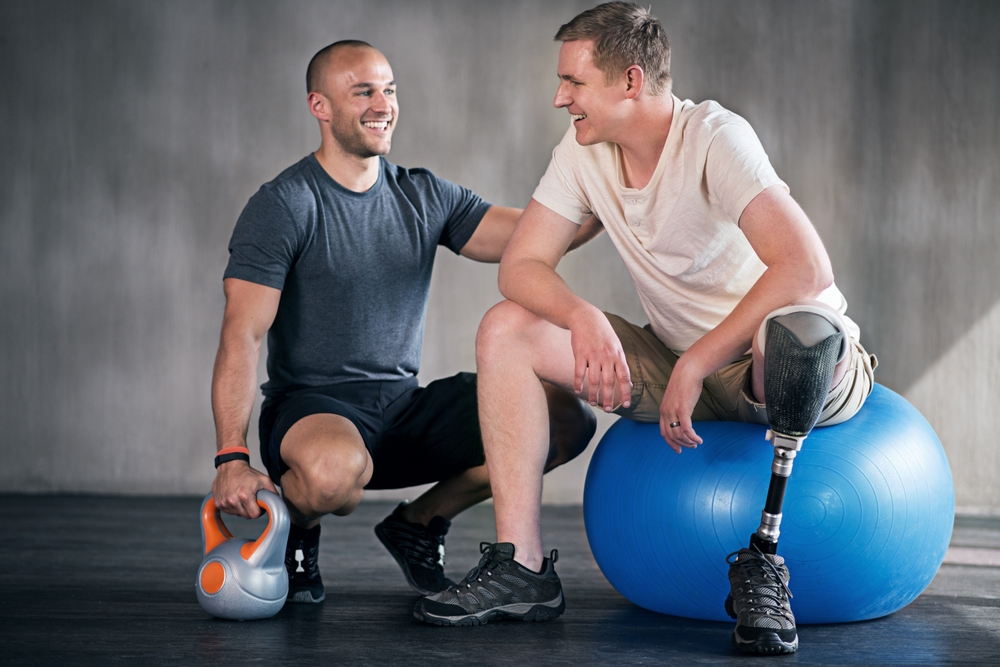
1. Bridges: strengthen the glutes and back; progress to a stability ball for pelvic control.
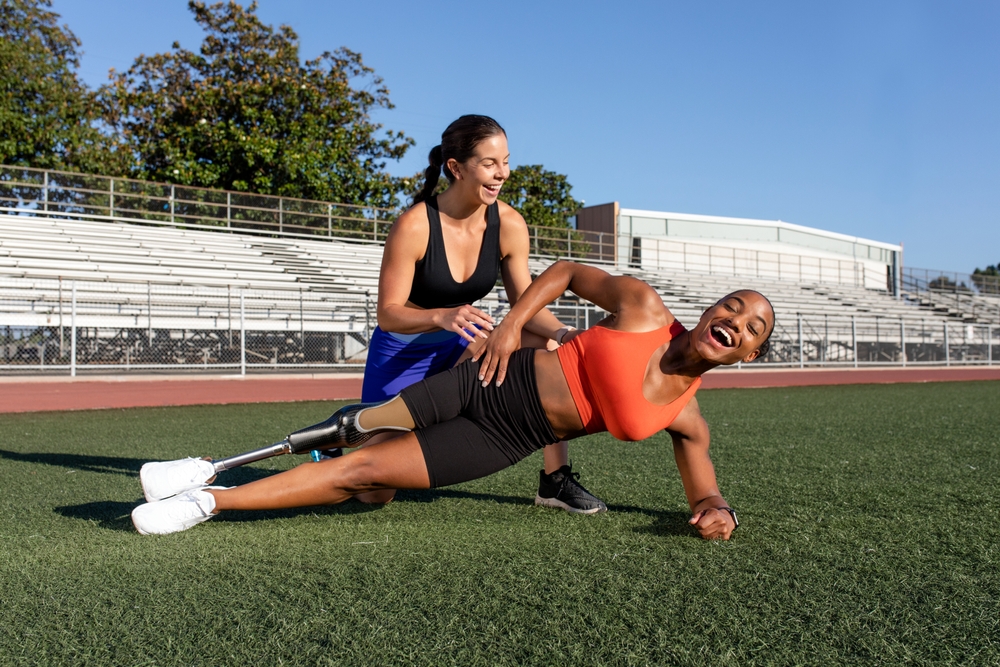
2. Side-lying hip raises or banded hip abduction: stabilise the pelvis for a smoother walking pattern.
3. Modified planks: build deep core endurance and trunk stability.
4. Core marches (lying on the back): strengthen the lower abdominals.
5. Towel squeeze or ball press: maintain inner-thigh (adductor) strength, especially after above-knee amputation.
6. Seated leg raises: engage the quadriceps without full weight bearing.
7. Side-to-side balance shifts: essential for early walking practice and falls prevention.
8. Modified step-ups with hand support: build strength for kerbs and stairs.
9. Resistance band rows: develop mid-back strength and posture.
10. Wall push-ups or seated dumbbell press: build upper-body strength for transfers and using walking aids.
Each exercise can be adapted to the amputation level, stage of healing and prosthesis use. A physiotherapist progresses the program over time towards goals such as walking, lifting or returning to sport.
See additional exercise resources from Amputees NSW.
Frequently Asked Questions (FAQs)
Final Thoughts
Exercise plays a central role in every stage of amputee rehabilitation, helping people rebuild strength and mobility, manage pain and feel confident in their bodies again. Whether someone is early in recovery or maintaining independence long term, movement is a vital part of the process.
Next Step
Call 1300 731 733, book an appointment online or make an NDIS referral for physiotherapy support after limb loss.
More options:
- Find out about NDIS physiotherapy
- Browse more articles on rehabilitation and mobility
- NDIS participants can ask their support coordinator or planner about including physiotherapy and exercise physiology in their plan.
Related articles