Wednesday, November 4, 2026 The OT Team at Physio Inq
In this article
Summary
- Improved Daily Living is one of up to 9 support categories in the capacity building budget of an NDIS plan.
- It funds assessments, training and therapies that build living skills and independence, such as occupational therapy and speech therapy.
- The funding is stated, so you can’t use it for other supports or move it to another category.
- Core supports are different: they help with everyday activities now and are flexible.
- To use it for allied health, choose a provider, agree on a service agreement, and work towards the goals in your plan.
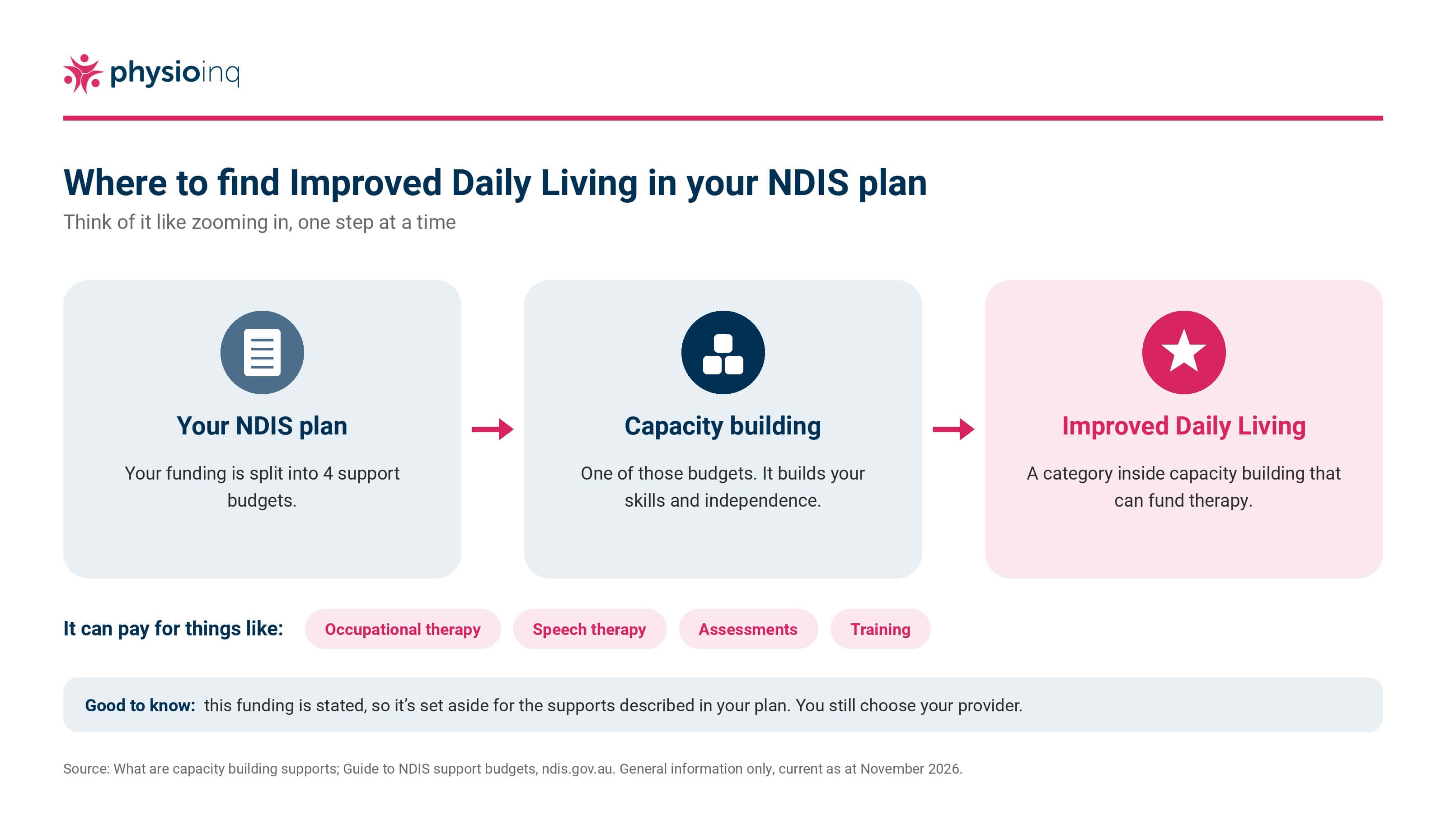
Improved Daily Living is a support category in the capacity building budget of an NDIS plan. It funds assessments, training and therapies, such as occupational therapy and speech therapy, that help NDIS participants build living skills and become more independent. The funding is stated, so it can only be used for those supports.
What is the Improved Daily Living Budget?
The Improved Daily Living budget is the part of an NDIS plan’s capacity building funding set aside for supports that build your living skills and increase your independence and involvement in your community, such as assessments, training or therapies.
Capacity building is one of four support budgets in an NDIS plan, and it can have funding in up to nine support categories. Improved Daily Living is one of them. You’ll only have funding in the categories that include the supports you need.
Depending on where you look, you may see this category called “Improved daily living”, “Improved daily living skills” or “CB Daily Activity”. They refer to the same funding.
Improved Daily Living Funding is Stated
All capacity building funding is stated. Therapy funding, for example, appears in your plan as a total amount, and you can’t move funding between capacity building support categories. You still choose your provider.

Which Therapies are Funded by Improved Daily Living?
Improved Daily Living can fund therapies like speech therapy to help with communication, or occupational therapy to build functional skills. Other therapy supports, including physiotherapy, may also be funded here, depending on your plan and goals.
What About Exercise Physiology?
This one depends on your plan. The NDIS lists working with an exercise physiologist on an exercise plan under a different capacity building category, Improved health and wellbeing. Check which category your plan uses before booking. Our Client Services team is always available to answer your questions.
What the NDIS Expects from Therapy
Therapy supports must be evidence-based and delivered by qualified allied health professionals who are AHPRA-registered or accredited by a relevant peak body.
Therapy doesn’t have to be about new skills alone. It can help you keep the skills you have, like a stretching program for someone with cerebral palsy, and it can include training family members, such as an OT showing family how to safely use a chair lift.
How is Improved Daily Living Different from Core Supports?
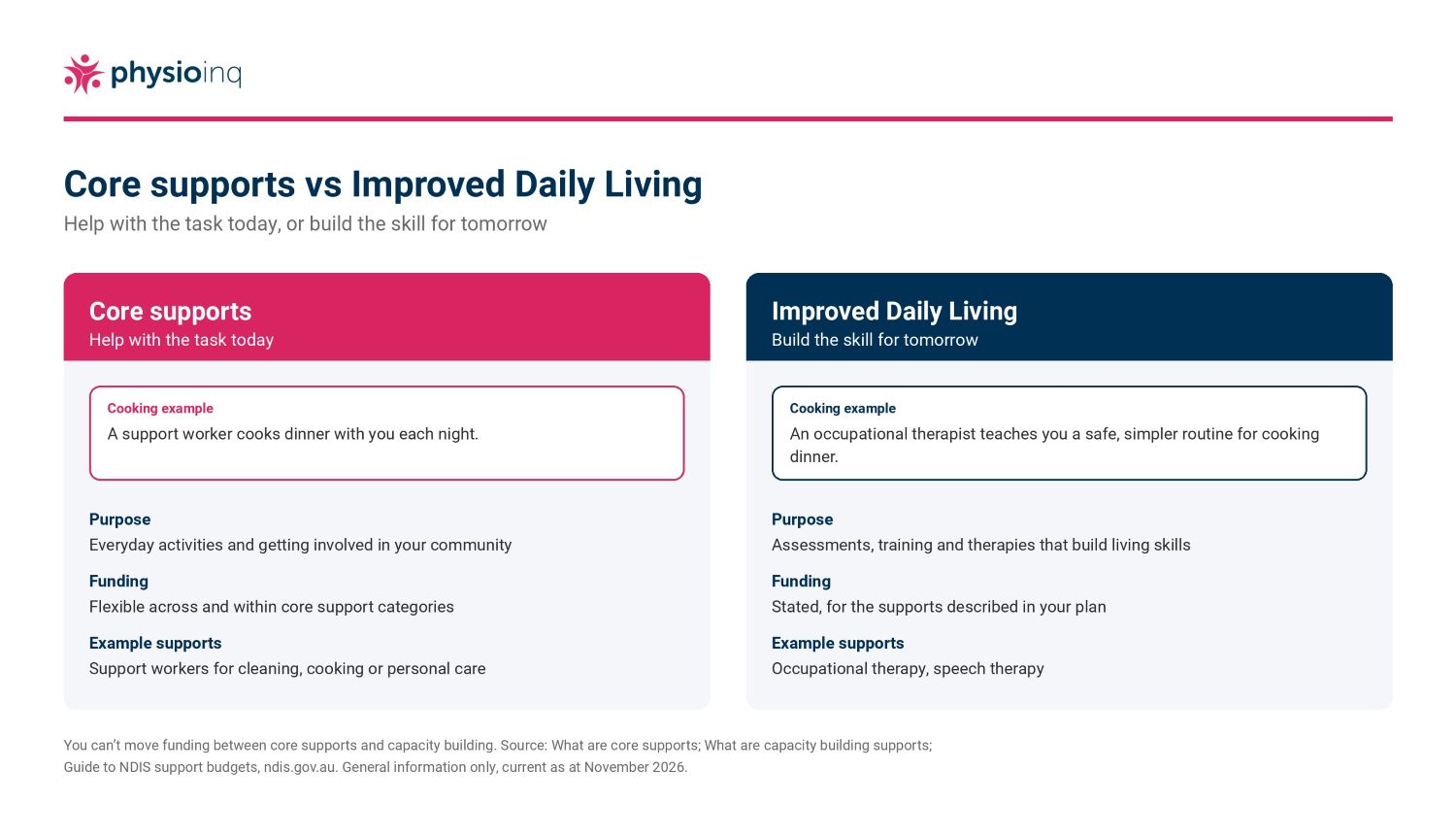
Core supports help you with everyday activities now, while Improved Daily Living funds therapy and training that build your skills for the future.
- Purpose: Core supports help with everyday activities and getting involved in your community, such as a support worker helping with cleaning, cooking or personal care. Improved Daily Living builds your skills to do things for yourself.
- Flexibility: Core funding is flexible, so you can use the total amount across and within its support categories. Improved Daily Living is stated.
- Moving money: You can’t move funding between support budgets, so Core funding can’t top up Improved Daily Living, or the other way around.
A simple way to tell them apart: a support worker cooking dinner with you each night is a Core support. An occupational therapist teaching you a safe, simpler routine for cooking that dinner is Improved Daily Living.
How Do I Use Improved Daily Living for Allied Health?
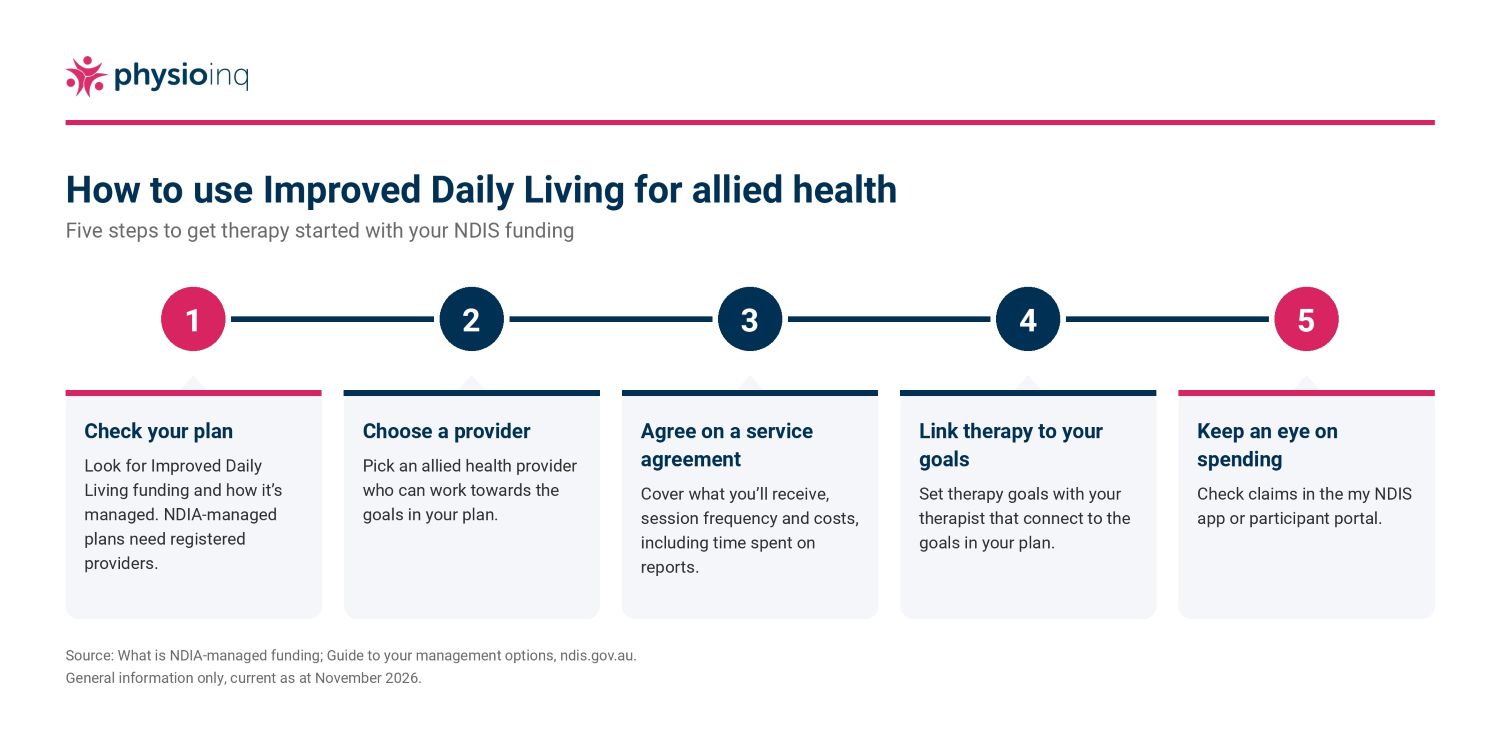
To use Improved Daily Living for allied health, check your plan, choose a provider and set up a service agreement, then work with your therapist towards the goals in your plan.
- Check your plan. Look for Improved Daily Living funding and note how it’s managed. If your plan is NDIA-managed, your providers must be registered with the NDIS.
- Choose a provider. Physio Inq is a registered NDIS provider supporting self-managed, plan-managed and NDIA-managed participants.
- Agree on a service agreement. This should cover what you’ll receive, session frequency and costs, including time spent on reports, so there are no surprises.
- Link therapy to your goals. Your therapist will set goals with you that connect to the goals in your plan.
- Keep an eye on spending. You can check claims in the my NDIS app or participant portal.
Towards the end of your plan, your therapist will usually write a report describing your progress and recommended supports. You receive the report first and can share it with the NDIA at a plan reassessment or check-in.
Some participants also use their funding for a functional capacity assessment when their needs change.
Final Thoughts
Improved Daily Living is where the NDIS can fund therapies like occupational therapy and speech therapy, and knowing that it’s stated and separate from core supports makes it easier to plan your sessions across the year.