Thursday, November 12, 2026 The Speech Team at Physio Inq
In this article
Summary
- Speech pathologists, also called speech therapists, work with people of all ages who have communication or swallowing difficulties.
- They help with speech, voice, language, fluency, reading, writing and swallowing.
- They complete an accredited university degree, and speech pathology is a self-regulated profession overseen by Speech Pathology Australia.
- A first session usually involves questions about the difficulties, some simple tests or observation, and practical strategies to start with.
- You usually don’t need a doctor’s referral to book.
A speech pathologist is a university-qualified allied health professional who assesses and treats communication and swallowing difficulties in people of all ages. That includes problems with speech, language, voice, stuttering, reading and writing, social communication, and eating and drinking safely.
What Does a Speech Pathologist do?
A speech pathologist assesses and treats people who have communication or swallowing difficulties, and often works in a team with other health professionals.
Their day-to-day work is very practical. A speech pathologist might:
- play a game with a 3 year old to practise new sounds, then show the parent how to keep it going at home
- help a school-aged child with the sound and letter skills behind reading and spelling
- work with an adult after a stroke to rebuild ways of finding and using words
- set up a communication device or picture system for someone who doesn’t use speech
- assess an older person's swallowing, and recommend safer food and drink textures.
Speech pathologists work in hospitals, schools and private practices, and some visit people at home.
What Conditions do Speech Pathologists Work With?
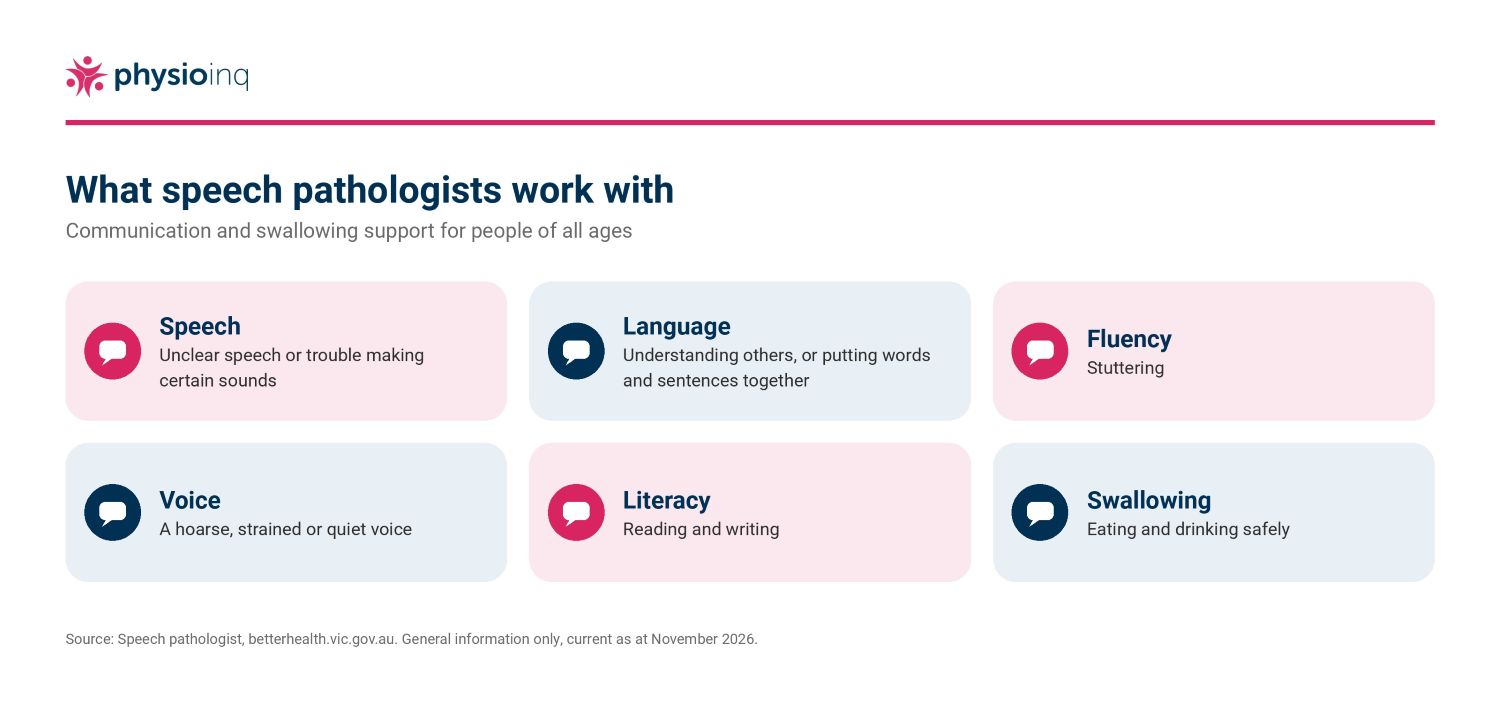
Speech pathologists work with difficulties in speech, voice, using and understanding language, fluency, reading, writing and swallowing (also called dysphagia).
- Speech: unclear speech or trouble making certain sounds.
- Language: understanding what others say, or putting words and sentences together.
- Fluency: stuttering.
- Voice: a hoarse, strained or quiet voice.
- Literacy: reading and writing.
- Swallowing and feeding: difficulty eating or drinking safely.
- Social communication: using language in conversations and play, including with autistic children and adults.
In children
Paediatric speech pathologists can help if a child needs support with speech, language or communication, or has problems swallowing food or drink. For example, it’s worth seeking help if a child uses only a few speech sounds at 2 years of age, or gets frustrated or upset when you don’t understand them. Read more about all our support services over on our speech therapy for children page.
In adults
For adults, speech pathologists often help with communication or swallowing changes after a stroke or brain injury, with progressive neurological conditions, or with voice problems. Learn about speech therapy for adults and aged care speech pathology.
Important note: sudden changes to speech or swallowing can be a sign of stroke and need urgent medical help. Call triple zero (000).
Other ways to communicate
Not everyone communicates mainly through speech. A speech pathologist might help a child learn to communicate in other ways, such as sign language, books or speech-generating devices, and give the family strategies to use at home. The same idea applies to adults who have lost speech, where a communication app or picture board can make everyday conversations possible again.
What Qualifications do Speech Pathologists Hold?
Speech pathologists complete a university degree accredited by Speech Pathology Australia, either a 4-year bachelor’s degree or a 2-year graduate-entry master’s.
Are speech pathologists registered?
They're not registered with AHPRA.
Speech pathology is a self-regulated profession, so there’s no national register to check like there is for physios or OTs. Instead, Speech Pathology Australia sets and upholds the profession’s standards, and it runs its own credential: Certified Practising Speech Pathologist (CPSP).
CPSP is the one to look for. To earn and keep it, a speech pathologist must hold a recognised qualification, show recent practice and meet annual professional development requirements. CPSP status is also needed to provide services under Medicare and most private health insurance.
How to find a certified speech pathologist
Speech Pathology Australia has a tool to help you find a speech pathologist, along with information about fees, rebates and funded programs. When you book, it’s reasonable to ask whether the speech pathologist holds CPSP status and has experience with your kind of difficulty.
What Happens in Your First Session with a Speech Pathologist?
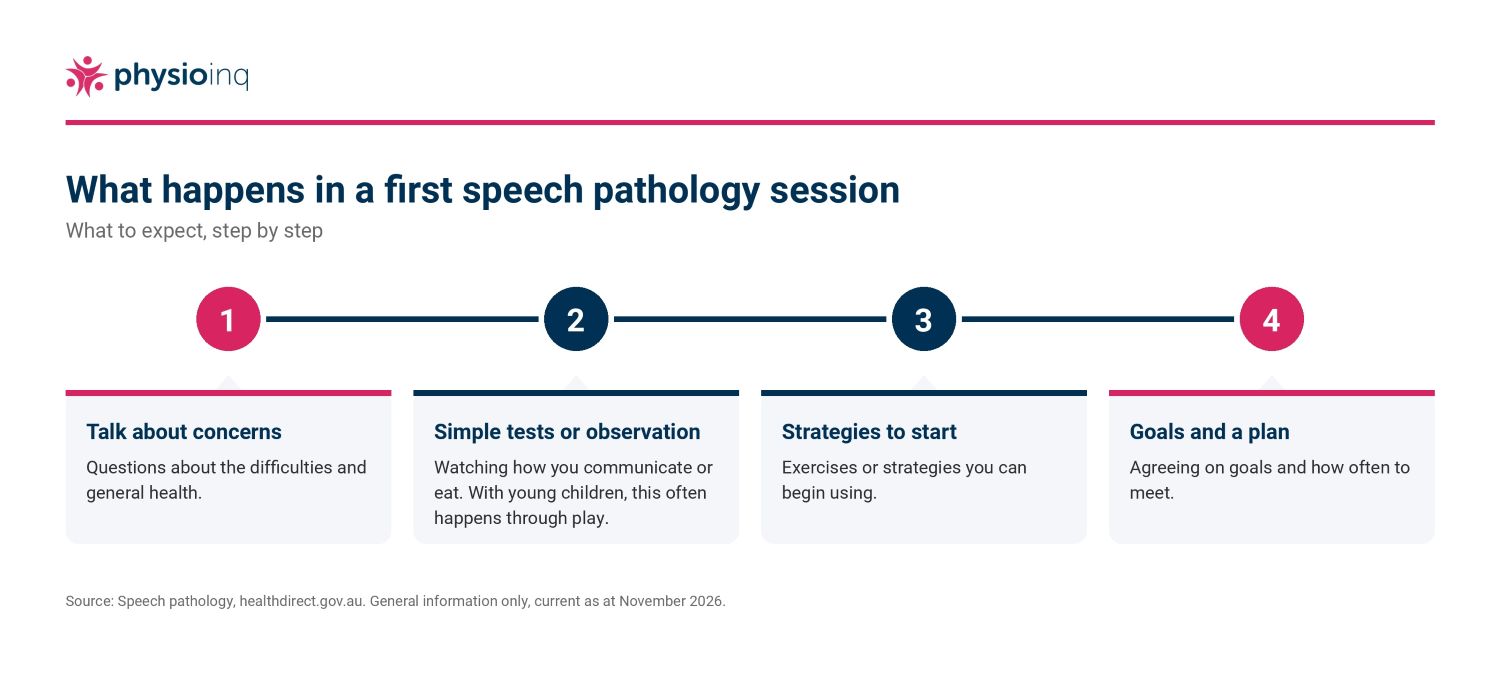
In the first session, your speech pathologist will likely ask about your communication or swallowing difficulties and general health. They may do some simple tests or watch how you communicate or eat. And they may give you exercises or strategies to start with.
With young children, much of this happens through play, so it may not look like a “test” at all. Sessions can be one-on-one, in groups or online, and the number of sessions depends on progress.
How to prepare for the first session
- Write down what you’ve noticed and when it started.
- Bring any previous reports, including hearing test results.
- For a child, a short phone video of them talking at home can show things they might not do in a new place.
What happens after the first session?
The speech pathologist will explain what they found, agree on goals with you, and suggest how often to meet. Most therapy includes practice between sessions, built into everyday routines like mealtimes, reading together or a daily phone call, because that’s where new skills get used.
Do you need a referral to see a speech patholgist?
You usually don’t need a doctor’s referral to see a speech pathologist, but Medicare may help with costs if you have one. Speech pathology can also be funded through the NDIS. Learn about NDIS speech pathology.
Final Thoughts
If talking, understanding, reading or swallowing has become harder for you or someone you care for, a speech pathologist can help work out what’s going on and where to start. To find out more, explore our mobile speech pathology services or send us a referral.