Thursday, November 26, 2026 The Team at Physio Inq
In this article
Summary
- Early childhood intervention includes therapies, supports and education that help young children develop skills for everyday activities.
- It happens in everyday places, such as home, childcare, playgroup and preschool, and families are part of the team.
- Occupational therapists, speech pathologists and physiotherapists are often involved, depending on the child’s needs.
- If you’re concerned about your child’s development, talk to your GP, child and family health nurse or paediatrician.
- Children younger than 6 don’t need a disability diagnosis to access the NDIS early childhood approach.

Early childhood intervention is support for young children with developmental delay or disability, and their families, to help children build the skills they need for everyday life. It’s often delivered by a team of professionals, such as occupational therapists and speech pathologists, in places children already spend time, like home, childcare and preschool.
What is Early Childhood Intervention?
Early childhood intervention includes therapies, supports, and education that help children develop the skills they need to take part in everyday activities. Sometimes children who get early intervention need less or no support as they get older.
Good early childhood intervention works with the whole family, not just the child. Under the NDIS Practice Standards, early childhood supports should be family-centred, focus on the family’s strengths, and assess the child’s development through their everyday routines and activities.
Early childhood intervention services and programs in Australia
Most families access early childhood intervention services through one of these pathways:
- The NDIS early childhood approach - early childhood partners help children younger than 9 and their families, and can connect them with supports.
- Thriving Kids - a new program for children aged 8 and under with developmental delay and/or autism and low to moderate support needs, which began rolling out from 1 October 2026.
- Private therapy - families can also see therapists directly, with or without a referral.
What Does Early Childhood Intervention Involve?
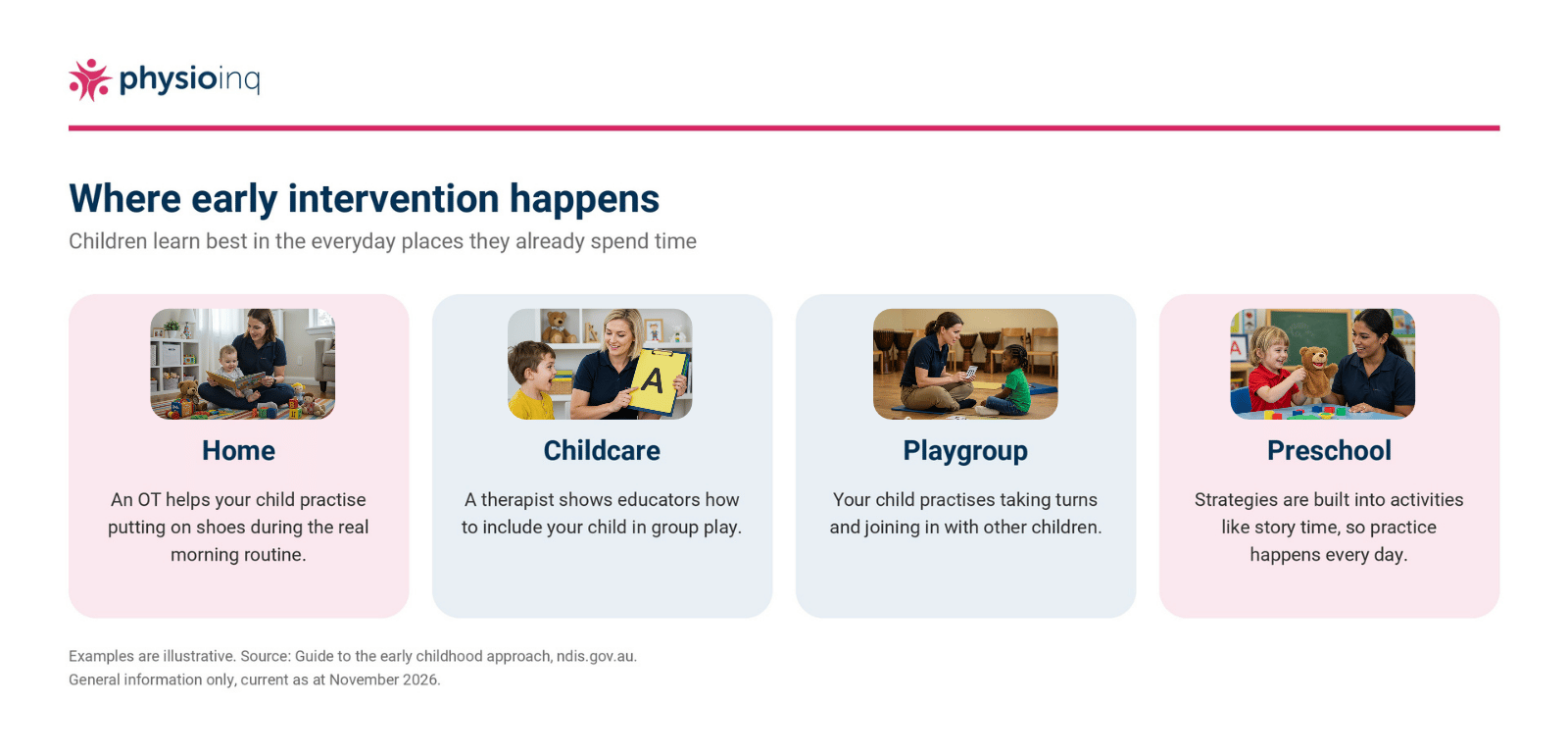
Day to day, early childhood intervention looks a lot like everyday family life, because children learn and develop best in natural, everyday settings such as home, childcare, playgroup, and preschool.
Rather than taking a child away for sessions alone, therapists work alongside parents, carers and educators, showing them strategies to build into routines the family already has. Building a family’s confidence to use everyday activities to support development is a core part of best practice.
Here at Physio Inq, this might look like:
- an occupational therapist helping a three-year-old practise putting on shoes as part of the real morning routine
- a speech pathologist showing a parent how to build new words into bath time
- a physiotherapist working on climbing and balance at the local playground
- a therapist visiting childcare to help educators include a child in group play
What is a key worker?
Some families choose to have a key worker: one main professional who coordinates the team and works most closely with the family. If a family wants a key worker, providers should work with the family to find a suitable one.
Which Professionals are Involved in Early Childhood Intervention?
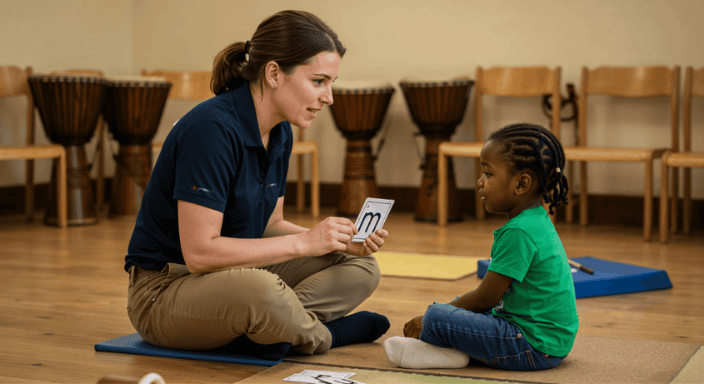
The professionals involved in early childhood intervention depend on the child’s needs, but often include occupational therapists, speech pathologists and physiotherapists, with audiologists and others where needed. Psychologists and dietitians can also be a part of early intervention teams.
- Occupational therapists help children with difficulties doing everyday things because of developmental delay, autism, physical disability or other challenges. In early childhood, that often means play, self-care like dressing and eating, and fine motor skills.
- Speech pathologists help with speech, language and communication, and with problems swallowing food or drink.
- Physiotherapists focus on movement, such as crawling, walking, balance and coordination.
Choosing early intervention providers
When comparing early intervention providers, it’s worth asking whether they work in everyday settings like your home or childcare, how they include parents in sessions, and whether they offer a key worker. If your child’s NDIS plan is NDIA-managed, providers will need to be registered with the NDIS.
If you’d like to see how this works in practice, read more about how our paediatric occupational therapists work with children and families.
When Should a Family Seek Early Childhood Intervention?
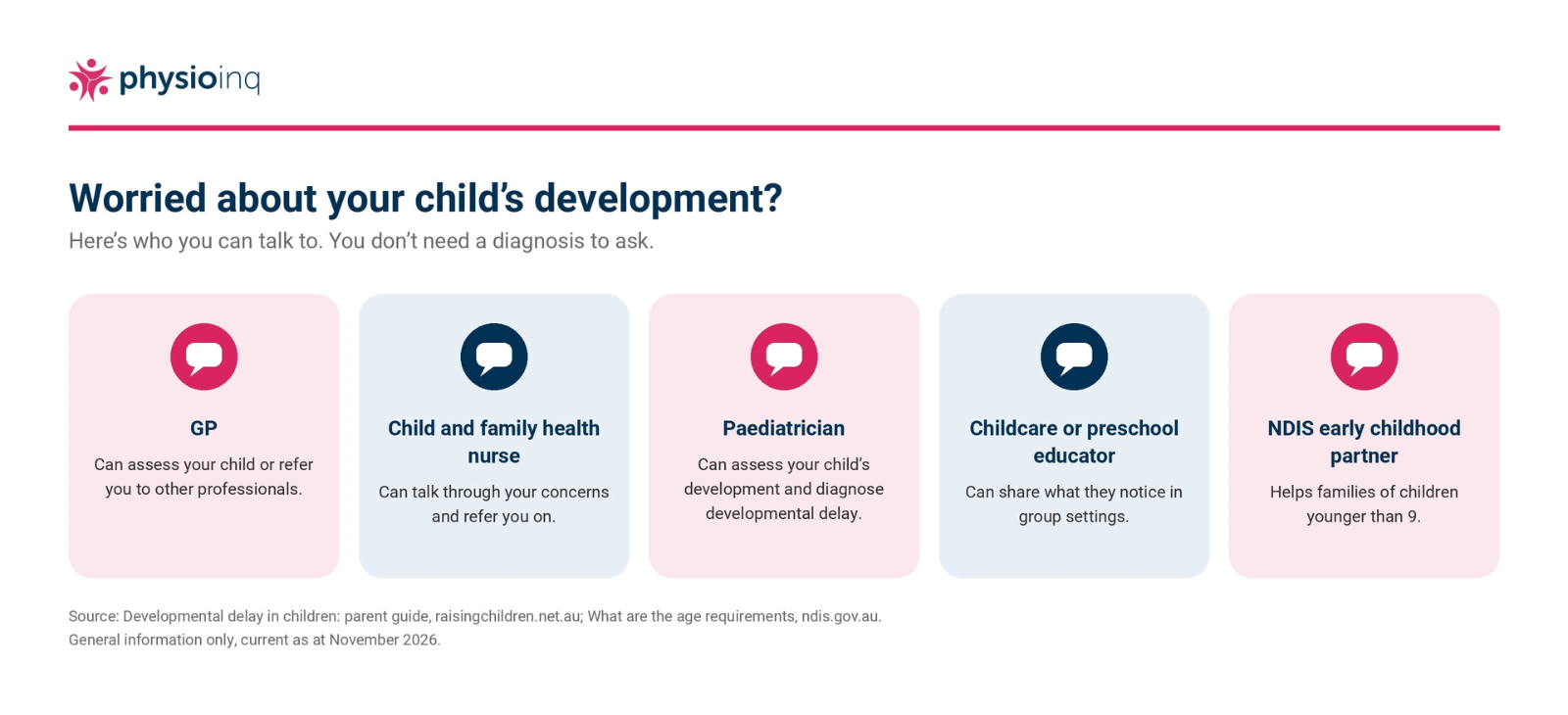
A family should seek early childhood intervention as soon as they have a concern about their child’s development. Start by talking to your GP, child and family health nurse or paediatrician, who can assess your child or refer you to other professionals.
You don’t need to wait for a diagnosis. Children younger than 6 don’t need a disability diagnosis to access the NDIS early childhood approach.
Signs it may be worth asking
Every child develops at their own pace, so there’s no single checklist. Speech is a common example. It’s worth getting help if your child uses only a few speech sounds at 2 years of age, or gets frustrated or upset when you don’t understand them.
Other reasons families reach out include a child who isn’t yet sitting, crawling or walking when expected, finds it very hard to join in play with other children, or struggles with everyday tasks like eating or dressing compared with children their age. Your own instinct counts too. If something feels off, it’s reasonable to ask.
Educators often notice things in group settings, so it can help to ask your child’s childcare or preschool what they’re seeing as well.
Is Early Childhood Intervention Changing in Australia?
Yes. Thriving Kids began rolling out from 1 October 2026 and is expected to be fully rolled out by 1 January 2028.
Children with permanent and significant disability, including autistic children and children with developmental delay who have high support needs, will continue to be eligible for the NDIS. Changes to NDIS access for children won’t begin until January 2028. This information is current as at November 2026.
Final Thoughts
If you have a question about your child’s development, asking early is always reasonable, and early childhood intervention is designed to fit into the life your family already has.
To talk about support for your child, explore our paediatric occupational therapy services or send us a referral.