Improve Your Joint Health | Make Habits Not Resolutions
To our dear patients and friends, welcome to the new year. For many the new year is a time to celebrate and hope for what’s to come. For others it may been dampened by the loss of a loved one or life altering injuries. I’ve seen both in my clinic so I wanted to write this article so that no matter your situation, you would be encouraged to make even the smallest of changes to take care of your health and make life a little bit easier this year. While money comes and goes, our health lasts our whole life. It is what makes the difference between enjoying a trip and hoping for it to end.

Many people who become health conscious make resolutions so they can turn over a new leaf. Those wiser have tried and failed and so cease to attempt any resolutions whatsoever. When it comes to your health, I think it follows the same principles for building anything that lasts. Rather than making resolutions, changes that will stick comes from changing your habits one at a time. Over time, you’ll be able to look back and see that you are not who you were. Biology confirms this - you get a new body every 7 years where every cell has been replaced. I like the saying ‘we are what we repeatedly do’ for our lives consists of how we spend every single second. As a physio- therapist here are 4 habits that I would recommend as steps towards living pain free year.
1. Move your joints through their complete range of motion each and every day
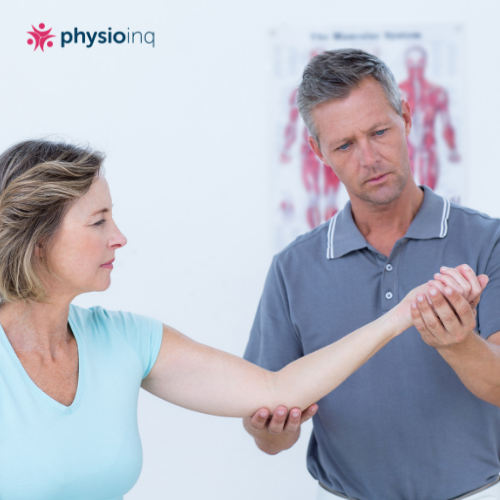
To prevent degenerative changes like disc herniations and osteoarthritis, our joints need to have continual circulation to keep it alive and recycle waste products. Without controlled movement, they lose sensation and the movement they need to age well. 5-10 repetitions is enough and they can be done anytime and anywhere. A helpful routine can be viewed below from our friend Ian Markow
2. Walk briskly (not running) for at least 120 minutes a week.
I would recommend 4 days of 30 min walks. These will help you and your heart adapt to stress, manage your mood and even improve your creativity.
3. Practice strength training (movements that exhaust you after 10 repetitions) at least twice a week for 30 mins.
This will help to prevent and often even reverse age related changes such as osteoporosis, osteoarthritis, tendinitis, bursitis, and countless other problems. Who doesn’t like being strong? Strength keeps your mentally resilient against the physical stress of life.
4. Breathe deeply for at least 10minutes a day.
This is the calm amidst the chaos. Our breathing is the only conscious control we have to our heart rate and therefore our fight or flight response. Are you stressed, anxious or sleeping poorly? Chances are that you’ll be in a stressed state and breathing will help you with that. It is the calm amidst the chaos. Learn to control your breathing and you will be able to control your oxygen levels, heart rate, pressure, your mood and even improve control over your physical activities. You’ll also be able to keep your organs moving well.
While these recommendations can be quite overwhelming to implement all in one go, even choosing one habit will help immensely over time. It may be helpful to spend a couple of months working on one before trying to adapt to another one. It’s a slower but surer way of changing your body. Here’s hoping that 2019 will be a step towards better health for you and your families.
Share the article
Popular Searches
Mobile Physiotherapy Sydney
Mobile Physiotherapy Western Sydney
Mobile Physiotherapy Northern Beaches
Mobile Physiotherapy Melbourne
Mobile Physiotherapy Adelaide
Mobile Physiotherapy Canberra
Mobile Physiotherapy Brisbane
Find More Mobile Locations
Alexandria
Glenmore Park
South Penrith
Engadine
Manning
Cranbourne
Sutherland
Find More Clinic Locations
Occupational Therapy Sydney
Occupational Therapy Western Sydney
Occupational Therapy North Sydney
Occupational Therapy Melbourne
Occupational Therapy Geelong
Occupational Therapy Adelaide
Occupational Therapy Brisbane
Occupational Therapy Gold Coast
- Why Exercise Is Great For Your Mental Health 25-Feb-2020
- Common Basketball Injuries 20-Feb-2020
- 10 Best Practices for Workplace Wellbeing 20-Feb-2020
- Here is What You Should Try to Speed Up Your Metabolism 17-Feb-2020
- 10 Ways To Decrease Pelvic Pain In Pregnancy 13-Feb-2020
Recent Posts
- Why Exercise Is Great For Your Mental Health
- Common Basketball Injuries
- 10 Best Practices for Workplace Wellbeing
- Here is What You Should Try to Speed Up Your Metabolism
- 10 Ways To Decrease Pelvic Pain In Pregnancy
- Back To School Tips For Mum And Dad
- What Are the Warning Signs You Could Have Heat Stroke?
- How Physiotherapy Can Help People With Dementia?
- Apply These 5 Techniques To Improve Your Running In 2020
- Pregnancy and Exercise
Categories
Tags
- Achilles Tendonitis (1)
- ACL (1)
- ACL injury (1)
- Acupuncture (1)
- AFL (1)
- Aged Care (1)
- Allograft (1)
- Alzheimers (1)
- Ankle (5)
- Ankle Rehabilitation (1)
- Ankle Sprain (3)
- Ankle Sprains (1)
- Ankle Strapping (1)
- Anterior Cruciate Ligament (1)
- Arthritis (1)
- Asthma (1)
- Autism (1)
- Back (6)
- Back Pain (6)
- Ballet (1)
- Baseball (1)
- Basketball (1)
- Basketball injuries (1)
- Basketball injuries list (1)
- Basketball injury (1)
- Basketball injury prevention (1)
- Basketball knee (1)
- Basketball shoes (1)
- Bike fit (1)
- bike seat height (1)
- Bike seat height adjustment (1)
- Bike seat height calculator (1)
- Blisters (1)
- Bone Density (1)
- Bone Health (1)
- Bursitis (1)
- Calf Muscle (1)
- Cardio Training (1)
- Carpal Tunnel Syndrome (1)
- Casting (1)
- Children Injuries (1)
- Children Sport (2)
- Children Sports Injuries (1)
- Cholesterol (1)
- Christmas (1)
- Chronic (1)
- City2Surf (1)
- Coffee (1)
- Cold (1)
- Common basketball injuries (1)
- Concussion (1)
- Concussions (1)
- Controlled Articular Rotations (1)
- Core (1)
- cortisone injection (1)
- Cramps (1)
- Cricket (1)
- Cross Training (1)
- Crossfit (2)
- Crossfit Injuries (1)
- Cycling (5)
- Cycling seat height (1)
- Cycling seat position (1)
- Cycling seat too high (1)
- Dementia (1)
- DOMS (1)
- Down Syndrome (1)
- Duchenne Muscular Dystrophy (1)
- dynamic stretching (2)
- Ear Barotrauma (1)
- Ear Pain (1)
- Easter (1)
- ECU tendon (1)
- Elbow (1)
- Epilepsy (1)
- Ergonomics (4)
- Exercise (8)
- Exercise during pregnancy (1)
- Exercise during pregnancy benefits (1)
- Exercise during pregnancy guidelines (1)
- Exercise Injuries (1)
- Exercise Physiology (1)
- Exercisephysiology (2)
- Exos Cast (1)
- Falls Prevention (1)
- feet health (1)
- Fibromyalgia (2)
- Fine Motor Skills (1)
- Fitness (2)
- Footware (1)
- Forehand grip (1)
- Forehand technique (1)
- Forehand tennis (1)
- Fracture (2)
- Free Weights (1)
- Gamer’s Thumb (1)
- Golf (1)
- Gym (1)
- Hamstring (2)
- hamstring injuries (1)
- Hamstring strain (1)
- Hamstring Strains (1)
- Hamstring Tendon Graft (1)
- Hamstrings (3)
- Head Injuries (1)
- Health (9)
- Health Tips (2)
- Heat (1)
- Heat Exhaustion (1)
- Heat Stroke (1)
- heel pain (1)
- Hip Flexors (1)
- Hip pain cycling (1)
- Hip Resurfacing (1)
- Hydration (1)
- In Home Assessment (1)
- Injury Prevention (2)
- ITB friction syndrome (1)
- ITB muscle (1)
- ITB pain (1)
- ITB syndrome (1)
- Jammed finger (1)
- Javelin (1)
- Joint Health (1)
- Joints (1)
- Knee (3)
- Knee Osteoarthritis (1)
- Knee Pain (5)
- Knee pain cycling (1)
- Lateral Ankle Sprain (1)
- Machine Weights (1)
- Mallet finger (1)
- Massage (3)
- MCL pain (1)
- Mental Health (2)
- Metabolism (1)
- Motor Neurone Disease (1)
- Muscle Twtiching (1)
- Musculoskeletal (1)
- NDIS (6)
- NDIS Funding (1)
- NDIS Plan Management (1)
- NDIS Service Agreement (2)
- NDIS Support Coordination (1)
- NDSP (2)
- Neck (2)
- Neck Pain (1)
- Nutrition (12)
- Occupational Therapy (6)
- Osgood-Schlatter (1)
- Osteoarthritis (2)
- Osteoporosis (2)
- Pars Defect (1)
- Patellar tendonitis (1)
- Patellar Tracking Disorder (1)
- Pelvic Pain (1)
- Physical Activity (1)
- Physio pregnancy (1)
- Physiotherapy (5)
- Pilates (7)
- Pillows (1)
- podiatrist (1)
- Pregnancy (3)
- Pregnancy and exercise (1)
- Pregnancy and exercise guidelines (1)
- Pregnancy exercise (1)
- Pregnancy physio (1)
- Prehab (1)
- Pre-Season Screening (1)
- Quadriplegia (1)
- Quervain’s Disease (1)
- Quervain’s Tenosynovitis (1)
- Relaxation Massage (1)
- Remedial Massage (1)
- Rheumatoid Arthritis (1)
- Rotator Cuff (3)
- Rugby (1)
- Rugby Injury Prevention (1)
- Rugby League (2)
- Runners (3)
- Runners knee (1)
- Running (15)
- Running knee (1)
- Running knee pain (1)
- Saddle height calculator (1)
- Saddle height cycling (1)
- Saddle height inseam (1)
- Saddle seat (1)
- Scheuermann’s Disease (1)
- School Bag (2)
- School Bags (1)
- School Tips (1)
- Scoliosis (1)
- Seat post adjustment (1)
- Seatpost adjust angle (1)
- Servers Disease (1)
- Shin Splints (2)
- Shoes (2)
- Shoulder (6)
- Shoulder Injuries (2)
- Shoulder Instability (3)
- Shoulder Pain (2)
- Shoulder Rehab (1)
- Shoulder Stability (1)
- Shoulders (1)
- Sinus Pain (1)
- skiing (1)
- skiing injuries (1)
- Sleep (1)
- Sleeping (2)
- Sleeping Postion (1)
- snowboarding (1)
- snowboarding injuries (2)
- Soccer (1)
- Soccer Injuries (1)
- Socks (1)
- Speech Pathology (1)
- Speech Therapist (1)
- Spine (1)
- Spondylolysis (1)
- Sports Injuries (6)
- Sports Massage (1)
- Sprain (1)
- Sprinting (1)
- Sprinting Prehab (1)
- static stretching (2)
- stress fractures (1)
- Stress Management (1)
- stretching (3)
- Stroke (1)
- Stroke Rehab (1)
- Supplements (1)
- Surfing (1)
- Swedish Massage (1)
- Swimming (7)
- Tendinosis (1)
- Tendon (1)
- Tendon injuries (1)
- Tendon Pain (1)
- Tendonitis (1)
- Tennis (2)
- Tennis Elbow (2)
- Tennis racquet grip (1)
- Tennis strokes (1)
- Tennis wrist pain (1)
- Tension Neck Syndrome (1)
- Triathlon (2)
- Volleyball (1)
- Weight Loss (2)
- Weight Training (4)
- Weights (1)
- Womens Health (1)
- Womens Sport (1)
- Workplace (8)
- Wrist Injuries (2)
- Yoga (2)